
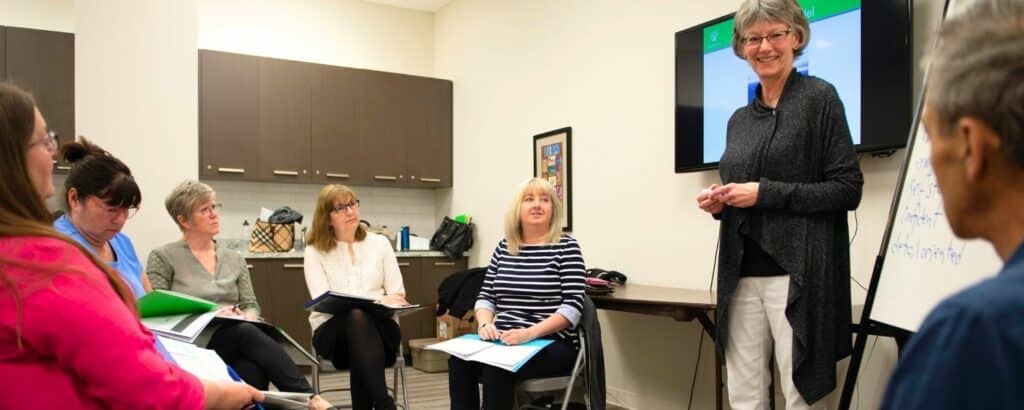
The Healing Journey is a multi-level psycho-spiritual program researched and developed since 1982 by Dr. Alastair Cunningham — a two-time PhD holder in microbiology and psychology, a cancer survivor himself, and an internationally recognized pioneer in psycho-oncology who received the Order of Canada in 2003 for his contributions to cancer supportive care. The program is designed for cancer patients and caregivers who want to play an active role in their own healing, drawing on tools and techniques from both modern psychology and a wide range of spiritual traditions to reduce suffering, improve coping, and support overall wellbeing. It is a multi-level program — beginning with Level 1: Coping with Cancer Stress and progressing through six levels including Skills for Healing, Steps Toward Spiritual Healing, Becoming Authentic, a guided book study, and Healing Through the Mind — with participants able to attend as many levels as they choose. The program is offered free of charge and includes downloadable workbooks and audio meditations for each level.
The research behind the Healing Journey is both longstanding and meaningful. Published studies on the program itself, developed and researched at Princess Margaret Cancer Centre since 1982, show that regular use of its methods can significantly reduce anxiety and depression, restore a sense of control, and relieve physical symptoms including fatigue, nausea, and pain. More strikingly, there is published evidence suggesting that when people with advanced cancers engage deeply with psychological and spiritual self-help, some may live longer than medically predicted — and in some cases, unexpected remissions have been observed. While extended life cannot be guaranteed and the mechanisms are not fully understood, the finding has been documented in peer-reviewed literature. More broadly, research on meaning-centered psychotherapy programs similar to the Healing Journey has found improvements in quality of life, psychological distress, psychological wellbeing, and mental adjustment to cancer in both the short and long term — with one study also demonstrating that such programs are cost-effective.
The Healing Journey is structured as a progressive, multi-level program where each level builds on the skills and insights developed in previous ones, allowing participants to go as deep as feels right for them. Level 1: Coping with Cancer Stress (4 weeks) introduces foundational coping techniques including relaxation, visualization, healthy thought management, and goal setting. Level 2: Skills for Healing (8 weeks) deepens these practices by adding meditation, journaling, exploring your inner healer, letting go of resentments, and small group discussion. Level 3: Steps Toward Spiritual Healing (8 weeks) explores the impact of cancer on spiritual identity and teaches skills to reduce frustration and cultivate peace. Level 4: Becoming Authentic (8 weeks) integrates the major themes of previous levels and explores authenticity, acceptance, and autonomy. Level 5 is a guided book study based on Eckhart Tolle’s work, exploring meaning and fulfillment in life choices. Level 6: Healing Through the Mind (10–15 weeks each) offers separate Psychological and Spiritual streams that can be taken in any order. Workbooks and audio meditations are available for each level.
The Healing Journey is explicitly inclusive of all religions and belief systems — it is a practical program that draws on a wide range of spiritual traditions and psychological frameworks without requiring or promoting any single religious affiliation. The spiritual dimensions of the program are approached as a deeply human part of the cancer experience: research has identified that a cancer diagnosis commonly challenges spiritual wellbeing for patients and caregivers of all backgrounds, and that spiritual care is an important element of comprehensive cancer support. The program explores universal themes — meaning, purpose, authenticity, inner peace, and the relationship between mind and body — in ways that are accessible and relevant whether you identify as religious, spiritual but not religious, agnostic, or secular. As one participant described it, the program became a transformative part of her cancer journey that she would not have found any other way.
The Healing Journey is open to both cancer patients and caregivers — and many caregivers find it profoundly valuable in ways that are distinct from, but just as meaningful as, the experience of patients. One caregiver described how Level 1 helped her understand that her sister with cancer simply wanted to feel normal — and that this insight transformed the way she showed up for her sister throughout the illness. The program’s tools for managing stress, building emotional resilience, processing fear and uncertainty, and exploring meaning and purpose are directly applicable to the caregiver experience, which carries its own significant psychological and spiritual weight. Caregivers are welcomed from Level 1 onward and can progress through the levels alongside patients or independently, at their own pace.
There is no requirement to commit to any particular number of levels — participants are welcome to attend as many levels as they choose, at their own pace, based on what feels meaningful and useful to them at each point in their journey. The starting point is Level 1: Coping with Cancer Stress, a four-week program with weekly two-hour sessions that introduces the foundational techniques of the entire Healing Journey. Subsequent levels require completion of previous ones, so the program builds progressively — but there is no pressure to continue beyond wherever feels right for you. Each level comes with a free downloadable workbook and audio meditation resources available on the Wellspring website, and the program itself is offered at no charge. As one participant put it, there is no possible way to leave the Healing Journey without tools and knowledge that improve your quality of life — regardless of how many levels you complete.