
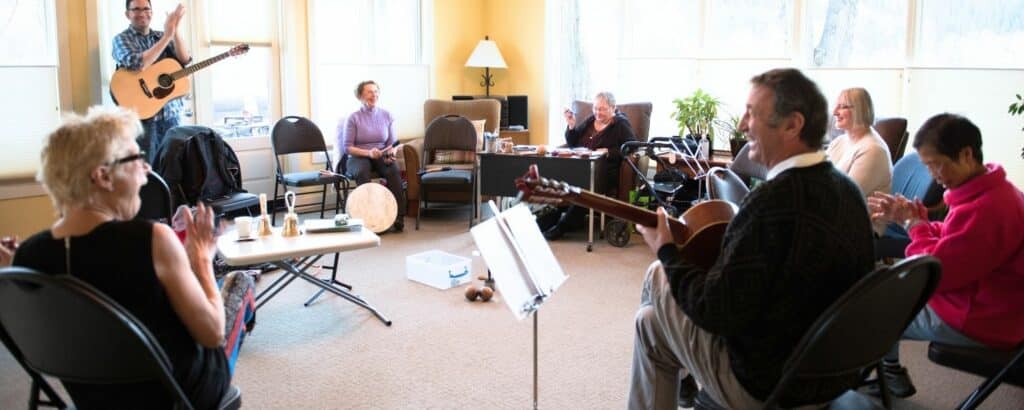
Not at all — the vast majority of Wellspring’s music programs require no prior musical experience, no ability to read music, and no particular talent. Whether you are joining a Drumming circle where drums are provided, trying a new instrument through Music Sampling, learning ukulele from scratch in a supportive mixed-ability group, playing harp note by note in the Harp Circle, or simply attending a House Music concert, the focus is always on the therapeutic experience of music — not on performance or skill. As the guiding philosophy across these programs states: you don’t need to be a musician, just someone who loves music and wants to explore its healing effects. Even Wellspring’s Choir welcomes members at any point in the season and is led by a director known for making complex arrangements feel accessible and enjoyable.
Wellspring offers a diverse range of music-based programs, spanning online and in-person formats, therapeutic workshops, live performance, and instrument-based experiences. Online programs include Music Therapy Workshops (1 to 4-part series led by a trained professional) and Music is My Therapy (led by certified music therapist Jennifer Buchanan, exploring the science of music, mental health, and neuroscience). In-person programs include a Choir (3-part harmonies, sheet music, no experience required), a Drumming circle (4-part series, drums provided), a Harp Circle (Edmonton members, all levels welcome, harps provided), Ukulele (5-week mixed-ability group, loaner instruments available), Music Sampling (introductory sessions with instruments like Kalimba, sound meditation, chant, and voice harmony), and House Music (free concerts for members, families, and the public). Because each program offers something different — from active music-making to listening and community — the best fit depends on your interests, energy, and what kind of connection you’re looking for.
Yes, the research on music and cancer care is substantial and covers a wide range of therapeutic applications. Multiple peer-reviewed studies have found that music-based therapies lead to measurable reductions in pain, anxiety, and fatigue, and improvements in quality of life for cancer survivors. One study from 2017 found that even simply listening to music may reduce the incidence of pain, anxiety, and drowsiness in cancer patients — a finding that speaks to the accessible, low-barrier nature of music as a therapeutic tool. Research has also specifically found that singing-based interventions improve aspects of quality of life for cancer survivors and caregivers, supporting programs like Wellspring’s Choir. Music therapy has been described in published literature as using nonverbal, creative, structural, and emotional qualities to facilitate self-awareness, self-expression, communication, and personal development — all dimensions that matter deeply during a cancer journey.