
In October 2026, Wellspring launched Exercise and Educate – Punjabi, a new program designed to make cancer-specific exercise and community connection more accessible to Punjabi-speaking people living with cancer. The program is an extension of Wellspring’s well-established Exercise and Educate program, designed by Dr. Nicole Culos-Reed and her team at the University of Calgary’s Health and Wellness Lab, and adopted by Wellspring in 2018.
How this new program came to fruition is a story about Mannat, a PhD student in Calgary, whose early life experience with illness and subsequent exposure to cancer, sparked her passion to ensure that everyone, including those in her own community, could receive the support they need when illness changes their lives.
Mannat’s Journey to Help Others
Mannat’s interest in the relationship between health and physical activity began when she was just five years old. Diagnosed with an autoimmune condition that has no cure, she learned early that physical activity could help manage symptoms and contribute to her well-being.
“Then in second grade, I learned about cancer, and when my teacher told me there are researchers looking for cures and ways to support people with cancer, I said ‘that’s what I want to do with my life,” she said.
As she grew older, cancer came closer to home. In grade seven, her mother experienced a breast cancer scare, and Mannat saw how much the support of her healthcare team meant to her mother and their family.
Later, a cousin was diagnosed with cancer and died within a month. Witnessing the devastation and challenges their family endured had a huge impact on Mannat.
“This was when I came face to face with the reality of cancer and I also got to see how difficult it was for him and his family to navigate the system, with the language and cultural barriers and gaps in understanding. That really stuck with me — how challenging this can be,” she said.
When two of her grandparents were subsequently diagnosed with cancer, Mannat’s understanding deepened. She became increasingly aware that, although Alberta offers programs and resources for people affected by cancer, not everyone can access them easily.
Passion Turned Research Mission
While completing her Master’s degree, Mannat worked with Dr. Nicole Culos-Reed, a UCalgary professor and researcher whose team develops exercise oncology programs for people affected by cancer. Mannat shared her interest in understanding the barriers facing South Asian communities, which eventually became the focus of her PhD research.
Through interviews conducted in Punjabi, Hindi, Urdu, and English, Mannat explored why people from these communities might struggle to access exercise oncology programs or participate in physical activity. Her research identified several barriers, including language, a lack of culturally familiar spaces, inaccessible locations, and the stigma surrounding cancer.
At one point, while sharing information about her research at a place of worship in a South Asian community, Mannat noticed people were drawn to the word “exercise” but quickly turned away when they saw “cancer.”
“Some even ran away!” she recalled with surprise. “It was sad and unfortunate, but I tried to look at the bright side; it got people running!” she laughed.
Humour aside, Mannat felt compassion for those who lacked the openness about cancer she had experienced growing up in Canada.
“Cancer can be so isolating for anyone, but in the South Asian community, it’s even more isolating because, for many, they can’t talk about it; it’s taboo,” she explained.
Determined to address these barriers, Mannat helped develop EXCEL – Punjabi, a culturally and linguistically tailored version of an existing program created by Culos-Reed’s exercise oncology team.
It was an important step forward. But Mannat wanted to take things further: to help bring these programs to more people who need them.
That’s where Wellspring came in.
Building on its longstanding partnership with Dr. Culos-Reed’s team, Wellspring drew on Mannat’s research and experience to develop Exercise and Educate – Punjabi, adapting its existing program to better meet the language and cultural needs of Punjabi-speaking people affected by cancer.
When research becomes real-world change
For Wellspring, Exercise and Educate – Punjabi was a natural fit.
“It’s exciting to see research and community partnerships lead to something that can make a real difference in people’s lives,” said Niki Fehr, Wellspring’s Program Director. “By adapting our programs to reflect people’s language and cultural needs, we’re helping make cancer support more welcoming and accessible.”
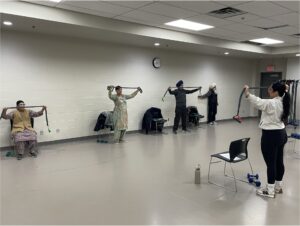
The new program, led by a Punjabi-speaking instructor, is now offered weekly at Genesis Centre in northeast Calgary.
From Mannat’s perspective, offering the program in Punjabi is paramount, but location is also a key factor in helping to make participation in the program more manageable.
“Transportation can be a significant obstacle for people who have to rely on others for rides, so offering this Wellspring program at Genesis Centre, an area of the city that is home to a large South Asian population, is a huge bonus,” she said.
Cost is a big factor too. All Wellspring programs are free, removing a financial barrier for people who may already be managing the additional expenses and demands that accompany cancer.
“For this population (and other minorities), there are so many barriers to gaining access to exercise and other interventions that would be beneficial when they have cancer, and financial is just one of them, so the fact that Wellspring’s programs are free is very helpful,” said Mannat. “Add to that, even those who can pay, to have access to the expertise of cancer-specific exercise for free – that’s huge.”
From Dream to Open Door
For any researcher, seeing years of study translate into a program that can make a tangible difference is a significant milestone. For Mannat, the launch of Exercise and Educate – Punjabi is especially meaningful because it brings together her personal motivation, research, and a deep-rooted passion for making cancer support more accessible.
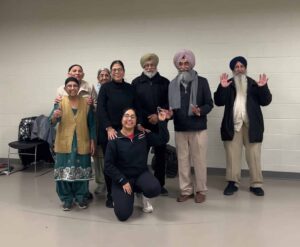
“I am just so grateful to Wellspring for seeing the importance of this and wanting to take it on and make it part of their offerings,” said Mannat.
And while the benefits of the exercise program are evidenced, and the mental health benefits are noted, Mannat believes something equally powerful happens when people unaccustomed to sharing find a space where they find companionship, understanding, and reassurance that they are not alone.
“Seeing people come together for exercise and then spend time talking openly about their cancer experiences is amazing. You hear them sharing and asking each other questions, and before you know it, the program blossoms into this community of people who care,” she said. “This sense of community that happens with all the programming Wellspring offers and all the exercise oncology programs as well is one of the most beautiful things to witness.”
In the big picture, the new program represents more than the introduction of another exercise class at Wellspring; it is an example of what can happen when dedication leads to research that opens doors and becomes meaningful support in people’s lives.